


_page-0001.jpg)


_page-0001.jpg)



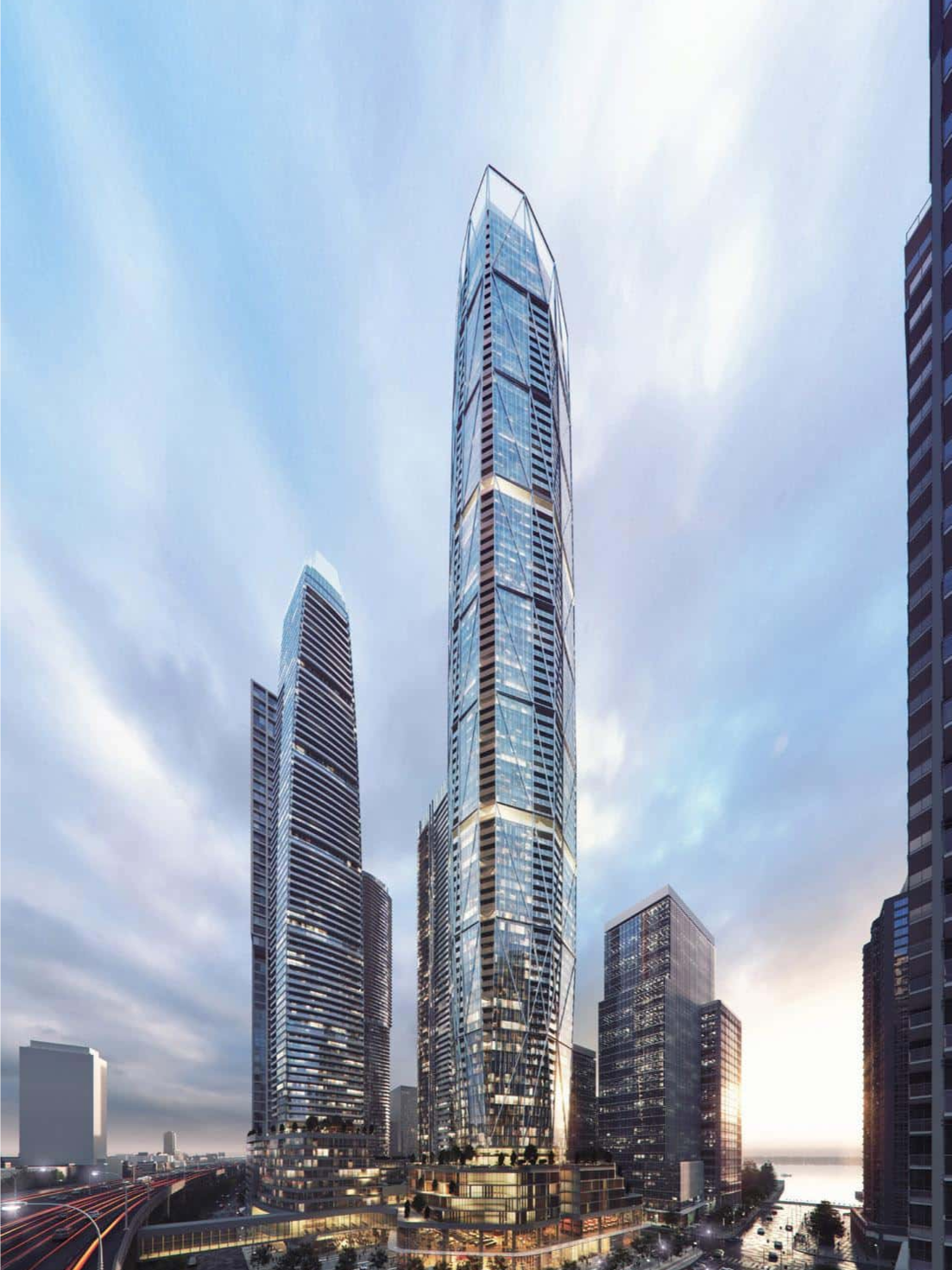
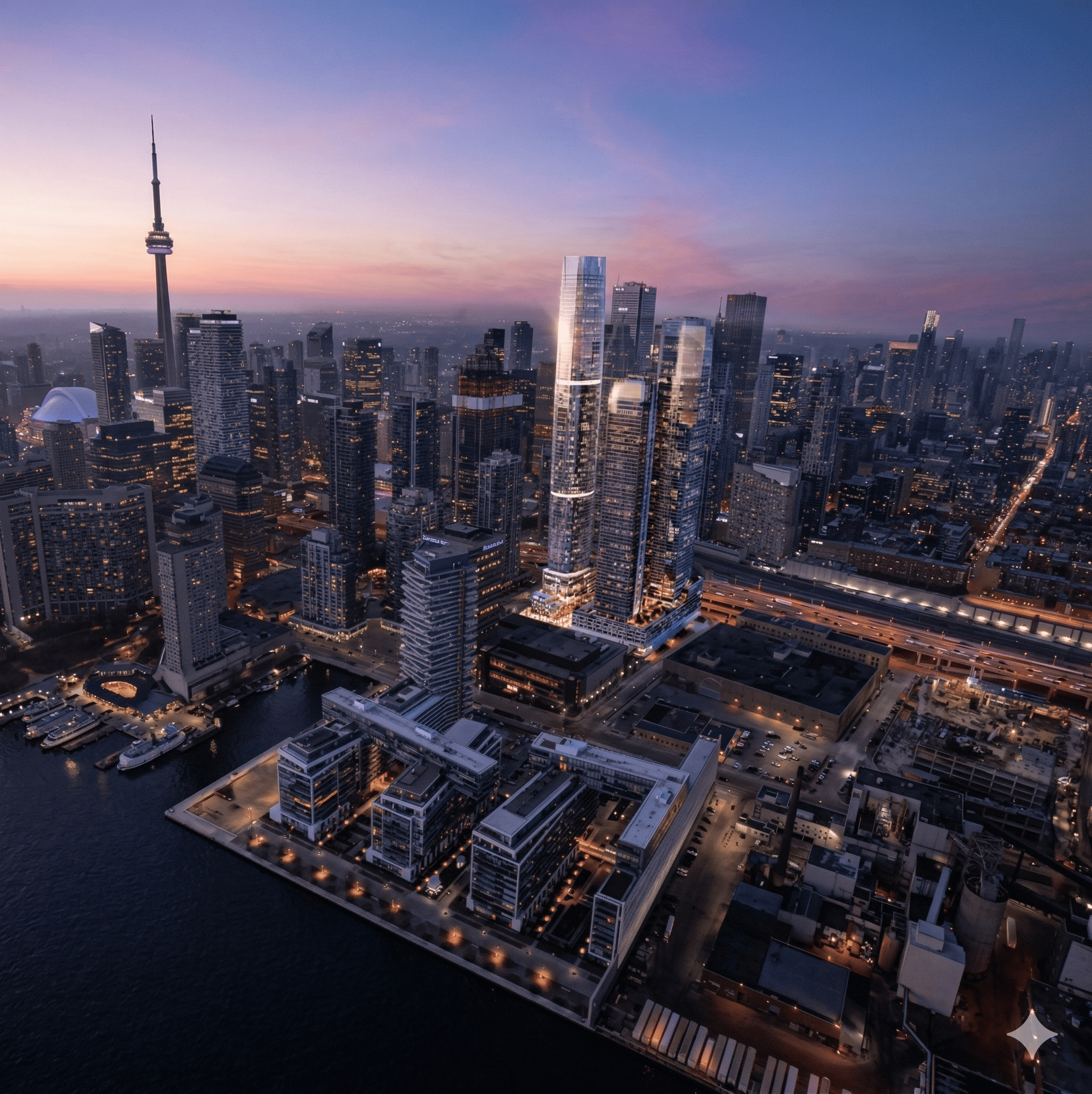
SkyTower is a 106-storey tower at the foot of Yonge Street, and the first residents are due to move in this fall. With this much attention on the building, here's what has been reported, what's still moving, and what to ask before you commit.
106 storeys, topped out March 2026 | 958 condominium units |
80,000 sq ft of amenities, plus 24-hour concierge | Fall 2026 first residents move in, up to the 56th floor |
The Verified Facts
| Item | What's been reported |
|---|---|
| Developer / architect | Pinnacle International / Hariri Pontarini Architects |
| Height | 106 storeys, topped out in March 2026 |
| Suites | 958 condominium units |
| "Tallest" claim | Pinnacle and trade reports call it the tallest building in Canada and the first residential tower in North America at 106 storeys. This is the developer's claim. |
| Amenities | About 80,000 sq. ft., a 24-hour concierge and heated underground parking |
| Hotel | A 223-room Le Méridien in the podium |
| Occupancy | First residents move in, up to the 56th floor, in fall 2026 |
Sources: Urban Land, RENX and Propmodo.
Four Collections, One Tower
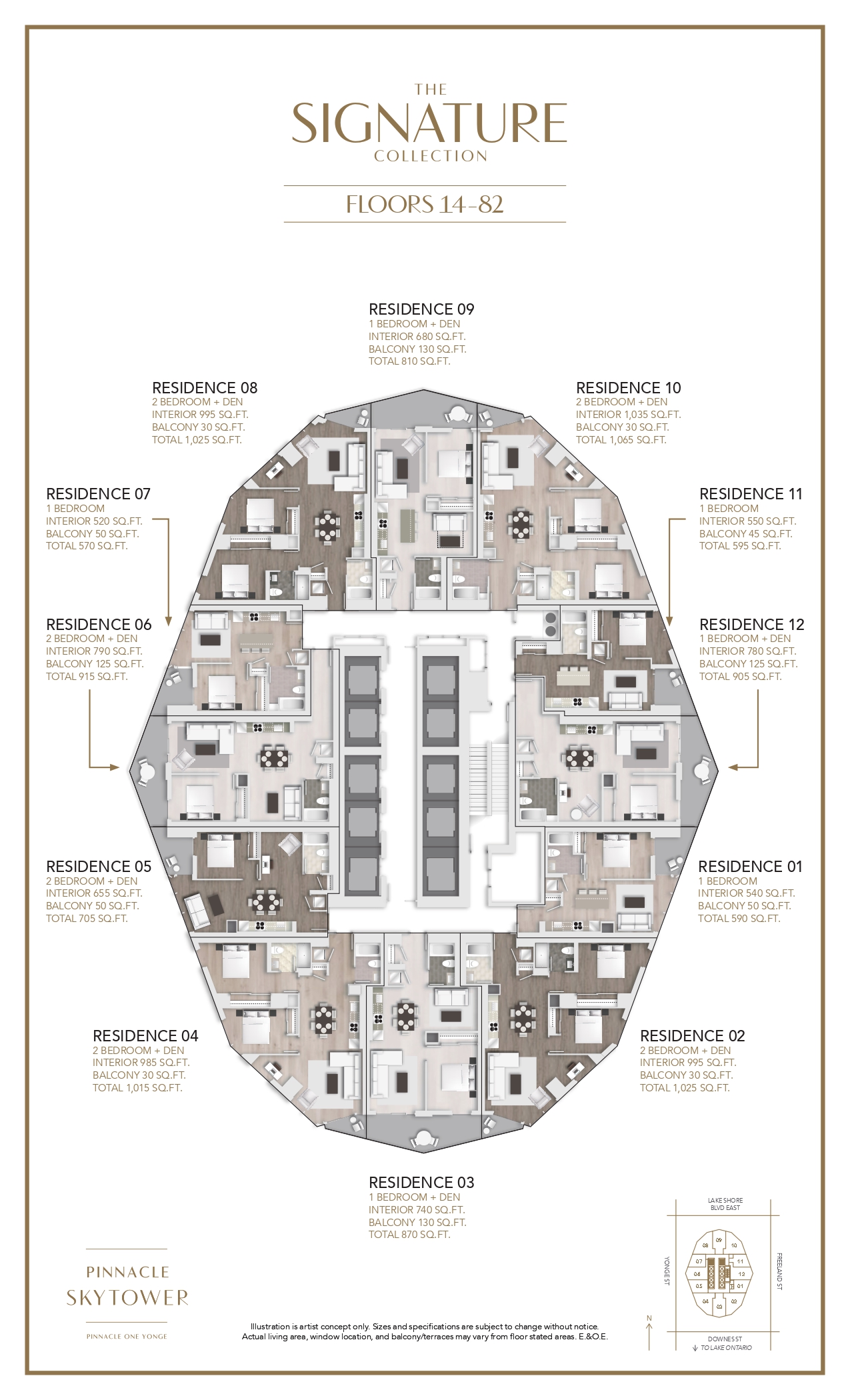
| Collection | Floors | Floor plans |
|---|---|---|
| Signature | 14 to 82 | View Signature |
| Landmark | 83 to 88 | View Landmark |
| Vista | 89 to 99 | View Vista |
| SkyVilla | 100 to 104 | View SkyVilla |
What's Still Moving
- Occupancy is phased. The first move-ins are reported to be up to the 56th floor. Ask your lawyer and the builder about the date for your floor.
- The hotel date varies by report. Earlier coverage said summer and later coverage said fall. Confirm before you plan around it.
- A final block of upper-floor suites was being released for sale, according to Propmodo. Pinnacle's sales team said the project is "well-sold," and Propmodo reported no sales incentives.
- The top-floor restaurant is planned, but details haven't been released.
Questions to Ask Before You Commit
- When is occupancy for my floor, and what are the interim occupancy charges? See our interim occupancy fees explainer.
- What is the estimated maintenance fee per square foot, and what does it cover?
- Which amenities are open at move-in, and which come later?
- What parking, locker and EV charging options come with my suite? See parking and EV charging.
- What will I need to prepare before moving in? Use our move-in checklist.
- Should I buy or keep renting? Try our framework for deciding.
The Neighbourhood
The neighbouring Prestige tower houses a City-run 50,000 sq. ft. community centre. For the area around the tower, see what's transforming on the East Bayfront.
If you'd like to compare SkyTower with other buildings on the waterfront, see 1 Yonge Street and nearby 10 Yonge Street on Waterfront Condos, along with their guide to which waterfront buildings hold value best.
Ready to see pricing and availability? Register for the SkyTower pricelist, submit your worksheet or call 647-259-8806.
This article is for general information only and is not legal, financial or investment advice. Details come from public reports and developer statements as of October 2026 and may change. Confirm all details with the developer and your lawyer.